Getting From Calgary to Lake Louise
Lake Louise sits about 184 km west of Calgary, two hours up the Trans-Canada. Here is how long the drive really takes from the city and the airport, which buses actually reach the lake, and what to sort out before the park gate.
Updated Mountain Time.
How far is it, and how long does the drive really take?
Lake Louise is about 184 km west of downtown Calgary, and the drive takes almost exactly two hours in clear conditions. From Calgary International Airport it is 201 km and a little over two hours, because you cross the north side of the city before the highway opens up.
| Downtown Calgary to Lake Louise | 184 km, about 2 hours |
|---|---|
| Calgary airport to the lake | 201 km, about 2 h 10 min |
| Banff to Lake Louise | 60 km, about 40 minutes |
| The route | Trans-Canada Highway 1 |
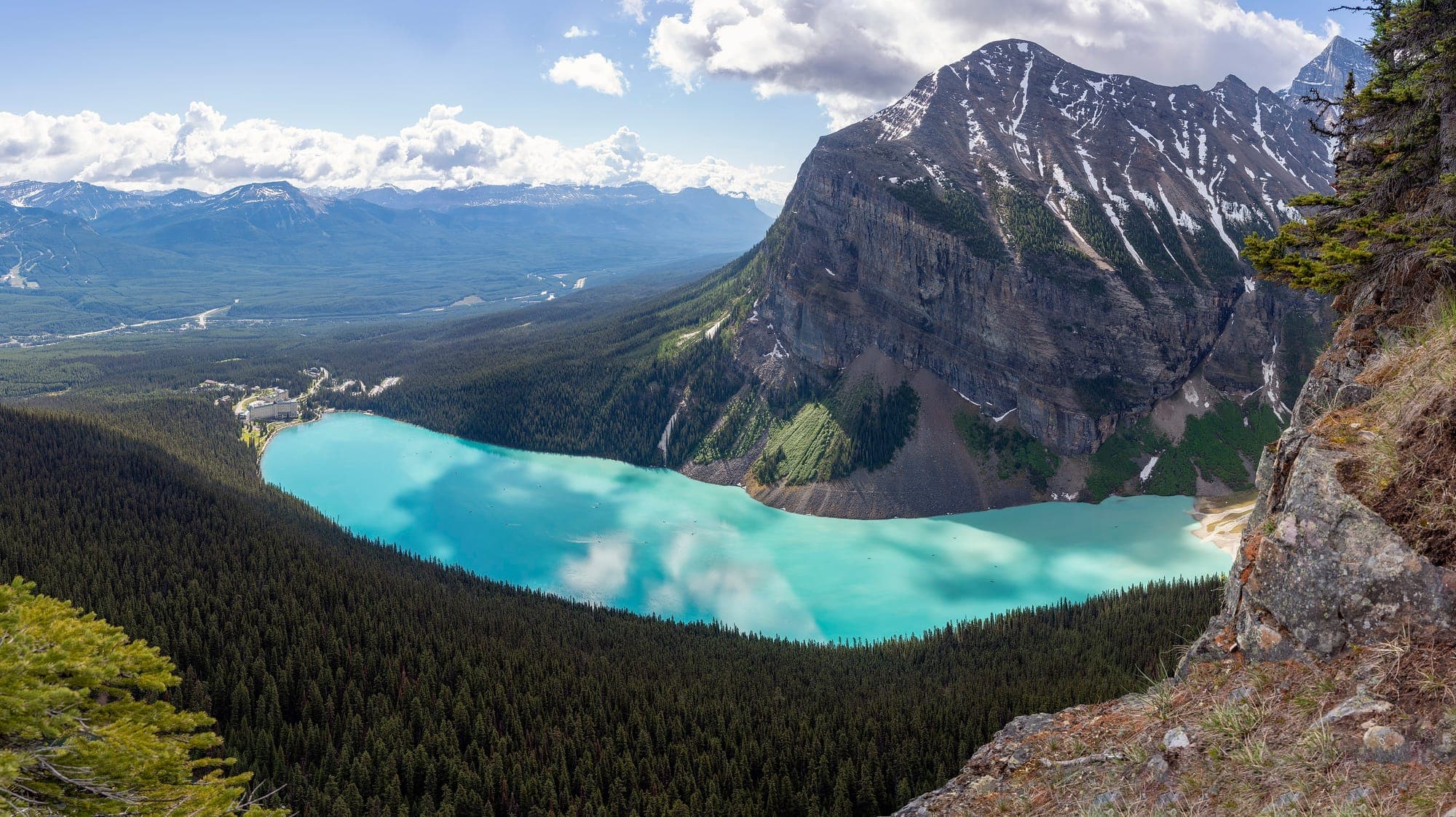
There is one road and no decisions. From the airport, take Stoney Trail west and merge onto Highway 1; from downtown, 16 Avenue NW is the Trans-Canada. After that you simply stay on Highway 1, through Canmore, past the Banff townsite and up the Bow Valley to the signed Lake Louise exit. The highway is divided the whole way. The exit drops you into the village; the lake itself is a short climb above it on Lake Louise Drive, so point your navigation at the lakeshore parking or the Park and Ride rather than at the name of the place.
Treat two hours as the floor rather than the promise. Summer weekends add slow traffic leaving the city, a queue at the Banff East Gate, and a crawl up Lake Louise Drive once the lot is close to full, so two and a half hours is the more honest figure. In winter a storm can stretch the same drive to three, and the return leg runs in the dark for much of the season.
The number that actually matters in July and August is not drive time but arrival time. Parks Canada says the lakeshore lot fills by sunrise, which is around 5:30 am in midsummer. Two hours of driving means leaving Calgary at 3:30 am to park at the lake, which is why most Calgary day-trippers now drive to the free Park and Ride instead and ride the shuttle up from there. The first shuttle leaves at 6:30 am, which sets the earliest realistic lakeside arrival for anyone not driving to the shore.
If you are landing at the airport and driving straight up, budget the whole transfer honestly: an hour from wheels down to leaving the rental lot is normal once bags and paperwork are done, international arrivals take longer, and the two-hour drive starts after that. In summer the long evenings make a late afternoon landing workable. In winter, a flight that lands after mid-afternoon puts the mountain half of the drive in the dark, and a night in Calgary, Canmore or Banff is the calmer play.
When to leave Calgary, by season: in July and August, before 4 am if you insist on the lakeshore lot, or around 5 am for a comfortable shuttle connection at the Park and Ride. In May, June, September and early October a normal early start works, though fine weekends still fill the lot by mid-morning. From late October to April, leave after sunrise; the lot rarely fills, the light arrives late in that deep valley anyway, and driving the mountain stretch in daylight matters more than beating a crowd that is not there.
Do you need to rent a car, or can you skip it?
Rent the car if your plans go beyond the lake itself; skip it if Lake Louise is the whole point and you are travelling in summer. That is the short version, and the arithmetic behind it is below.
A car is the only way to stand on the lakeshore before the first shuttle arrives, the only practical option from November through April, and the thing that lets you stop at a trailhead or take the old parkway on a whim. Every major rental brand operates from the Calgary airport, and this is about as easy as mountain driving gets: one divided highway, no passes to climb, no gravel. If you are renting between November and March, ask at the counter what tires are on the car; all-seasons are the default on most fleets, and the previous section on winter driving explains why that matters here.
What a car does not buy you in July and August is access. Lakeshore parking costs $42 a day and is gone by dawn, and the Moraine Lake road is closed to personal vehicles entirely. In peak season a car mostly delivers you to the Park and Ride, where you board a $12.75 shuttle like everyone else. Seen in those terms it is a convenience, not a necessity, and the rental, fuel and $42 lot fee often add up to more than a coach seat.
The arithmetic is worth doing before you book the rental. Driving a couple to the lake in August costs the rental day, a tank of fuel, the park pass at $24.50 for the vehicle, and then either $42 for the lot you probably will not get into or two $12.75 shuttle fares from the free Park and Ride. The coach from Calgary lists from $66.75 each, one way, as part of a round trip. For two people the car usually still wins on price; for one person it often does not, and for anyone landing at the airport mid-morning in peak season, the coach also deletes the worst hour of the day, which is circling for parking.
Two carless plans genuinely work. The first is the direct coach: Brewster Express runs from the airport and downtown Calgary to the Chateau through summer and early fall, covered in the next section. The second is to base yourself in Banff, which has far more beds than the Lake Louise village and a cheap year-round public bus, Roam route 8X, running to the village and the lakeshore daily. Either way you give up sunrise and gain a nap.

Which buses and coaches actually run from Calgary?
One scheduled service takes you from Calgary all the way to the lake: Brewster Express, run by Pursuit. Everything else either stops at Banff or passes through the village on an intercity run, and the best-known names are the easiest ones to get wrong.
| Brewster Express, Calgary to the Chateau | from $66.75 one way |
|---|---|
| Banff Airporter, airport to Banff only | connect to Roam 8X |
| Roam Transit 8X, Banff to the lakeshore | $12.50 adult each way |
| On-It regional bus from Calgary | not running in 2026 |
| Rider Express intercity coach | stops in the village |
Brewster Express picks up at Calgary International Airport and at downtown Calgary hotels and drops you at Fairmont Chateau Lake Louise, which stands on the lakeshore itself. The ride takes about three hours. The posted 2026 Lake Louise schedule runs from 1 May to 31 October, with about six departures a day toward the lake and four back, and Pursuit lists fares from $66.75 per adult one way, priced as part of a round trip, before taxes and fees. It is also the transfer the Fairmont itself points guests to, so book ahead in summer.
Read the timetable before treating the coach as a day trip. On the posted 2026 schedule the first departure from Calgary is 6:15 am and the last coach back leaves the lake at 3:15 pm, so an out-and-back by coach buys you roughly five to six hours at the lake, and the times shift between seasons. That window suits a lakeshore walk and a tea house hike; it does not suit sunrise photography or a long day on the trails. Check the current schedule on Pursuit's site before you build the day around it.
The Banff Airporter, the shuttle most people find first, does not serve Lake Louise at all. It runs between the Calgary airport, Canmore and Banff, and that is where it ends. It still earns a place in the plan as a first leg: ride it to Banff, then change to Roam route 8X for the last 60 km.
Roam Transit route 8X is the public bus between Banff and Lake Louise, and it is the cheapest seat on this page: $12.50 for an adult and $6.25 for a senior or youth each way in 2026, with children under 12 free. It runs daily, year round, from the Banff High School transit hub to the Lake Louise village and the lakeshore, and reservations are available and worth making between May and October because the buses fill.
On-It Regional Transit, the cheap weekend bus from Calgary that a decade of blog posts still recommends, is not an option this year: the service connecting Calgary, Canmore and Banff is not operating for the 2026 summer season. Any guide that tells you to take On-It is out of date.
Rider Express, the intercity carrier, does stop at Lake Louise on its Calgary to Vancouver run, at the gas station at 200 Village Road. It is scheduled as a long-haul through service rather than a sightseeing bus, so check the timetable carefully before building a day around it; the departures suit people going to Vancouver, not people going to the lakeshore for the morning.
Beyond the scheduled services there are private transfers and guided day tours from Calgary and the airport. They cost multiples of the coach fare and we have not priced them here; they earn their keep mainly for groups, for flight times the coaches do not fit, and for anyone who wants Moraine Lake in the same day without managing the shuttle system themselves.
Buy the park pass before you reach the gate
Everyone who stops anywhere in Banff National Park needs an entry pass, and the slowest place to buy one is the gate itself on a summer morning. Buy it online from Parks Canada before you leave the city; passes are also sold at the gates, at visitor centres and at partner retailers around Calgary.
| Adult, per day | $12.25 |
|---|---|
| Senior, per day | $10.75 |
| Youth, 17 and under | free |
| Family or group, per vehicle | $24.50 |
| Discovery Pass, adult, one year | $83.50 |
| Discovery Pass, family or group, one year | $167.50 |
| Free entry, Canada Strong Pass | 19 June to 7 September 2026 |
The day pass is better than it sounds: it is valid until 4:00 pm on the day after purchase, so a pass bought for an afternoon arrival covers the next morning too. The family or group rate covers everyone arriving together in one vehicle, which makes $24.50 the number most carloads actually pay. Keep the pass visible on the dashboard once you park; it is checked in the lots as well as at the gate.
If you are riding a coach rather than driving, ask the operator whether park entry is included when you book; policies differ between services and seasons, and it is a cheaper question to ask at booking than to settle at the gate.
If you are genuinely only driving through, you do not need a pass. Parks Canada requires one for stopping in the park, not for travelling Highway 1 through it, and westbound vehicles can use the through lane on the far right at the Banff East Gate. The exemption is narrower than it sounds: stop anywhere, at a viewpoint, a trailhead or the lake, and you need the pass, and the two scenic alternatives, the Bow Valley Parkway and the Icefields Parkway, require a pass even if you never leave the car.
Two ways to pay less. Entry is free for everyone from 19 June to 7 September 2026 under the Canada Strong Pass, though parking fees and shuttle fares still apply through that window. And if you will spend seven or more days in national parks within a year, the annual Discovery Pass at $83.50 for an adult or $167.50 for a group is the better buy.
Driving the Trans-Canada in winter
The highway to Lake Louise is a major, plowed, year-round route, and a winter drive from Calgary is routine far more often than it is dramatic. Parks Canada's own advice still deserves to be taken literally.
From November to March, Parks Canada says to winterize your vehicle, and snow tires are mandatory by law on some park roads: on the Icefields Parkway and Highway 93 South from 1 November to 31 March, and on the Trans-Canada west of Lake Louise through Yoho National Park from 1 October to 30 April. The Alberta stretch you drive from Calgary carries no tire law of its own, but it gets the same weather as the roads that do, and all-season tires in January are a false economy in the Bow Valley. The Highway 93 page carries the live status and the winter rules for both park roads.
Check road conditions before you leave; our page pulls 511 Alberta's reports and the highway cameras onto one screen. Fill the tank in Calgary, carry washer fluid, and plan the drive in daylight, because the sun sets early in midwinter and wildlife moves at dusk. If a front is crossing the divide, going a day earlier or later is the single best safety decision available to you.
The reward for the extra care is that winter is when a Calgary day trip works best. Lakeshore parking is paid only from 15 May 2026 to 12 October 2026, so outside those dates the lot is free and usually has space, the frozen lake carries skaters instead of queues, and the ski resort sits directly across the highway from the village. Leave after sunrise, arrive with the whole short day ahead of you, and start the drive home before the light goes.

Where to stop and stretch on the way
Canmore is the stop that makes sense: roughly the halfway point, the last full-sized town before the park gate, and the easiest coffee off the highway, with services signed from both interchanges.
Past Canmore you enter the park, and the Banff East Gate is where passes are checked, so have yours ready or use the through lane if you are not stopping. The Banff townsite, about 40 minutes short of the lake, is the last place with every service: fuel, groceries, a pharmacy, and a proper main street to walk if the weather has turned and the day needs a plan B.
From Banff you can trade the final stretch of Highway 1 for the Bow Valley Parkway, the old road up the valley. It is slower, it is signed and speed-limited for wildlife, it requires a park pass even if you never stop, and parts of it close seasonally, but when it is open it is the prettiest way to finish the drive.
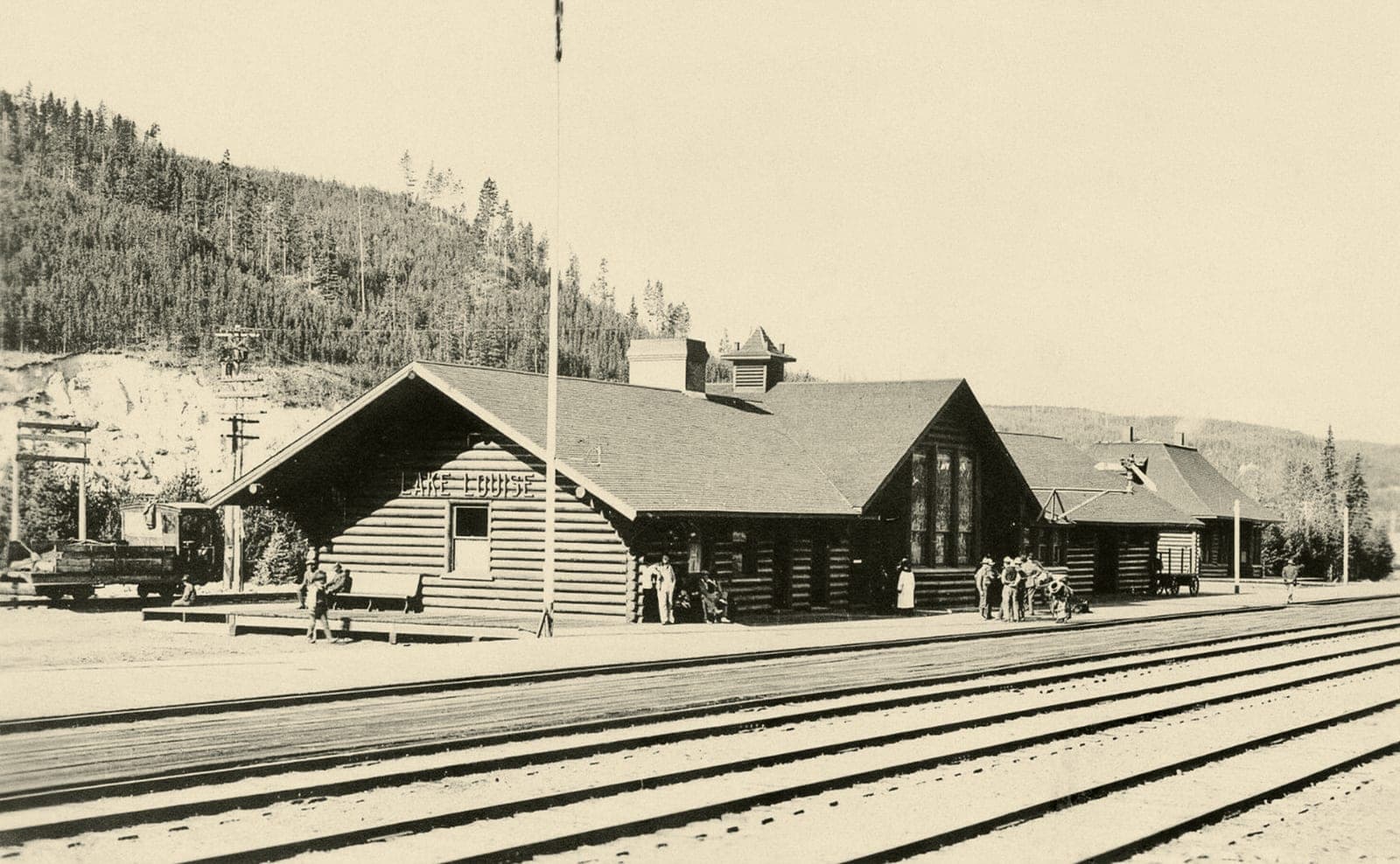
Lake Louise village, at the foot of the final climb, has fuel and food, and it is the last of both before the lake. Fill up long before this point, though; stations are far apart inside the park, and Parks Canada's advice to start with a full tank holds in every season.
Plan the drive home too. On summer Sunday afternoons the eastbound highway carries everyone back to Calgary at once, and the queue tends to knot up around Canmore, so leaving the lake before mid-afternoon or well after dinner beats leaving with the crowd. And if Lake Louise is a stage rather than the destination, note that the village is also the junction for the Icefields Parkway north to Jasper and for Highway 1 west into Yoho; both are worth their own planning, both require a park pass, and the winter tire rules from the section above apply to each.
Once you know how you are getting here, the harder question is what to do between arrival and the drive back. We keep an hour-by-hour answer on the one-day itinerary page, built around the same parking and shuttle constraints described above.
Common questions
How long is the drive from Calgary to Lake Louise?
Is there a bus from Calgary to Lake Louise?
Do I need a park pass just to drive through?
Should I stay in Calgary and day-trip to Lake Louise?
Distances and drive times come from Lake Louise Ski Resort and Fairmont Chateau Lake Louise. Coach details come from the operators: Brewster Express, Banff Airporter, Roam Transit route 8X and Rider Express, with the 2026 On-It suspension from Roam Transit's service notice. Pass rules are from Parks Canada's park passes page and winter driving advice from Parks Canada's driving page. Last checked 12 August 2026.